

Housing construction has changed remarkably little over the decades. But in Wyoming — a state of roughly 577,000 people spread across nearly 98,000 square miles — doing things the way they have always been done isn't going to solve today's housing challenges.
That was one of the biggest takeaways in Casper, Wyoming, where NeighborWorks® network organization Wyoming Housing Network (WHN) is bringing together an unexpected group of partners around an ambitious idea: What if building housing differently could increase the housing supply and help grow the workforce needed to build it?
That question is at the heart of Goodwill Landing, a 24-unit proof-of-concept development led by Wyoming Housing Network in partnership with In Our Hands and a growing group of local, state, educational and philanthropic partners. The project will provide housing for people facing significant barriers to housing while testing innovative construction technologies that WHN hopes could ultimately be replicated throughout Wyoming, and beyond.
For Melissa Noah, executive director of Wyoming Housing Network, the project reflects a willingness to rethink how housing gets built in a rural state.
“If we want to solve our problems, we can’t continue to do it the same way,” Noah shared.
When necessity drives innovation
Wyoming's rural geography creates challenges that conventional development models don't always address well. Wyoming Housing Network owns 14 properties across the state, including properties in small communities where the construction workforce can be extremely limited.
“In some of our communities, we don't even have a plumber when we want to go in there and build,” Noah said.
Wyoming also has no off-site housing factories, and contractors across the state are stretched thin. Add the state's short construction season, high infrastructure costs and lack of state housing funding, and the need to find new approaches becomes even clearer. 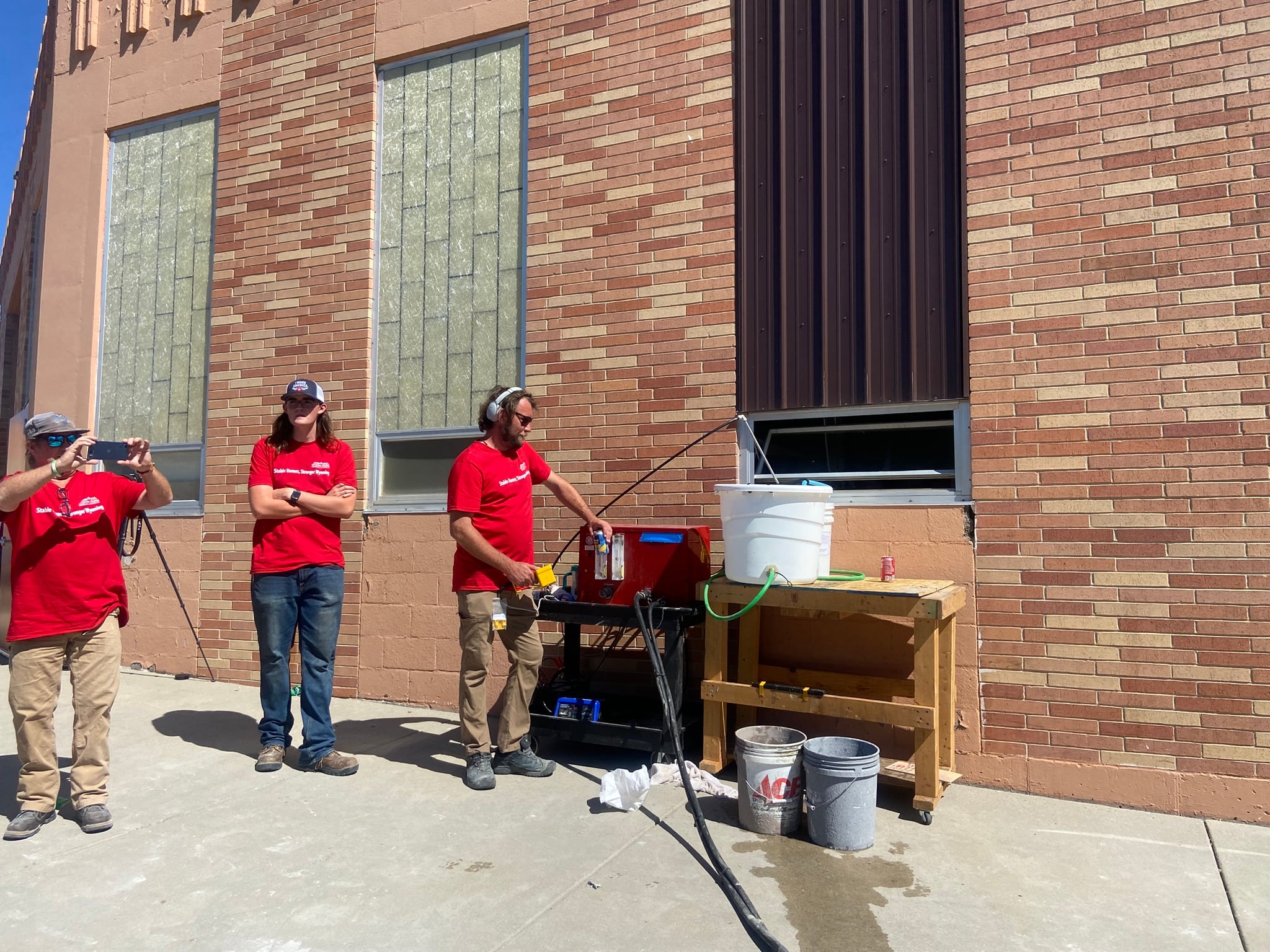
During WHN's 2023 strategic planning process, its board challenged the organization to diversify its development pipeline and explore new ways to respond to community housing needs. Those conversations eventually led WHN and its partners to ask a deceptively simple question: Do we want to keep doing what we've always done, or do we want to try something different?
They chose different.
Soon after, Noah saw In Our Hands' work on Instagram.
She reached out and asked whether the organization had ever considered bringing its construction technology to Wyoming.
Today, they're doing exactly that.
Building differently, and building the workforce
In Our Hands' construction technology was itself born out of necessity.
Co-founder Aaron Resnick explained that the organization's work began on the Pine Ridge Indian Reservation, where an enormous housing need collided with limited workforce capacity and extreme weather. The challenge was to develop housing that could be built quickly, efficiently and with the workforce available in the community. 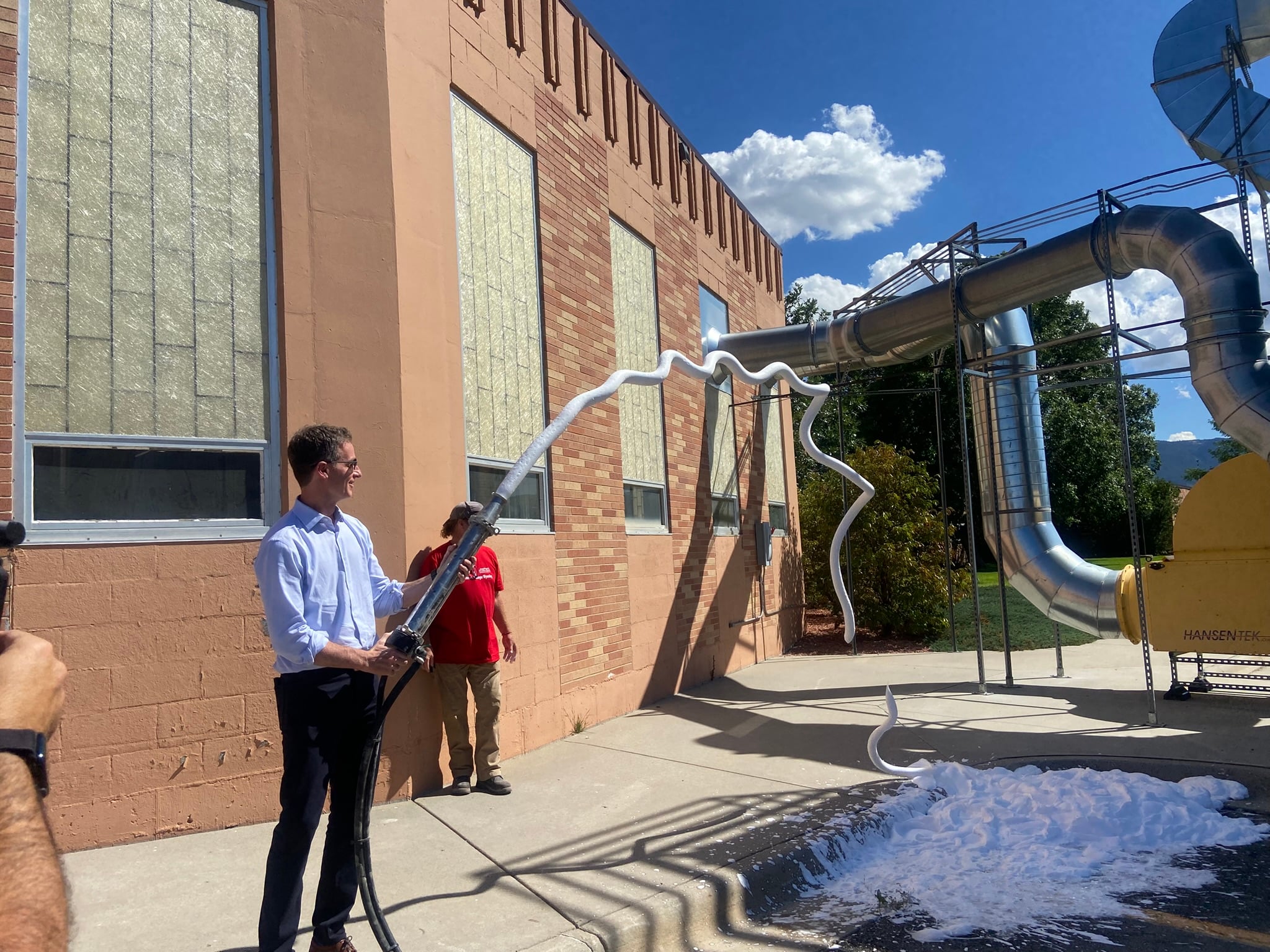
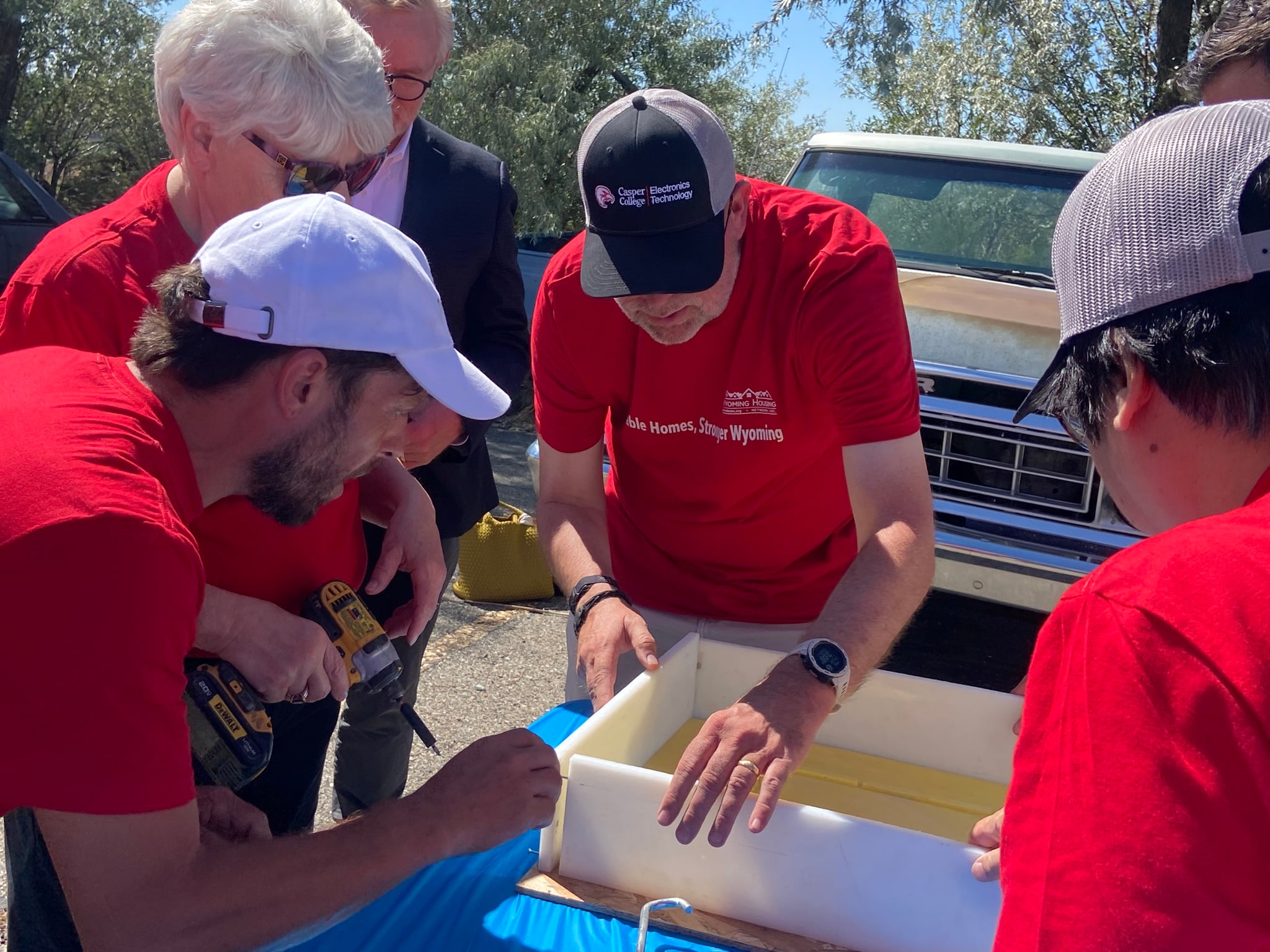
The strategy was to create highly insulated dome homes. More recently, the strategy also included panelized construction. That way, more of the building process can be constructed off site. The approach isn't just about building faster. It is also about making a limited construction workforce more productive while creating opportunities for people to learn construction skills through meaningful work in their own communities. The technology also offers potential long-term benefits for the homes themselves. The high-performance structural cellular concrete used in the project is designed to create highly insulated homes that can withstand extreme temperatures while requiring relatively little energy for heating. The material is also designed for durability and resilience, including resistance to fire, mold, pests, water and extreme wind; qualities that particularly excite Noah because of their potential to reduce long-term maintenance needs and create housing that can remain a community asset for years to come.
Goodwill Landing will put several applications of that technology to the test. Plans include 22 dome homes, accessible units using the panelized system, and a three-bedroom, two-bath model home that will serve as shared office space for service providers. The project is intentionally designed as a proof of concept — a place where partners can see different applications of the technology and learn what could work elsewhere. 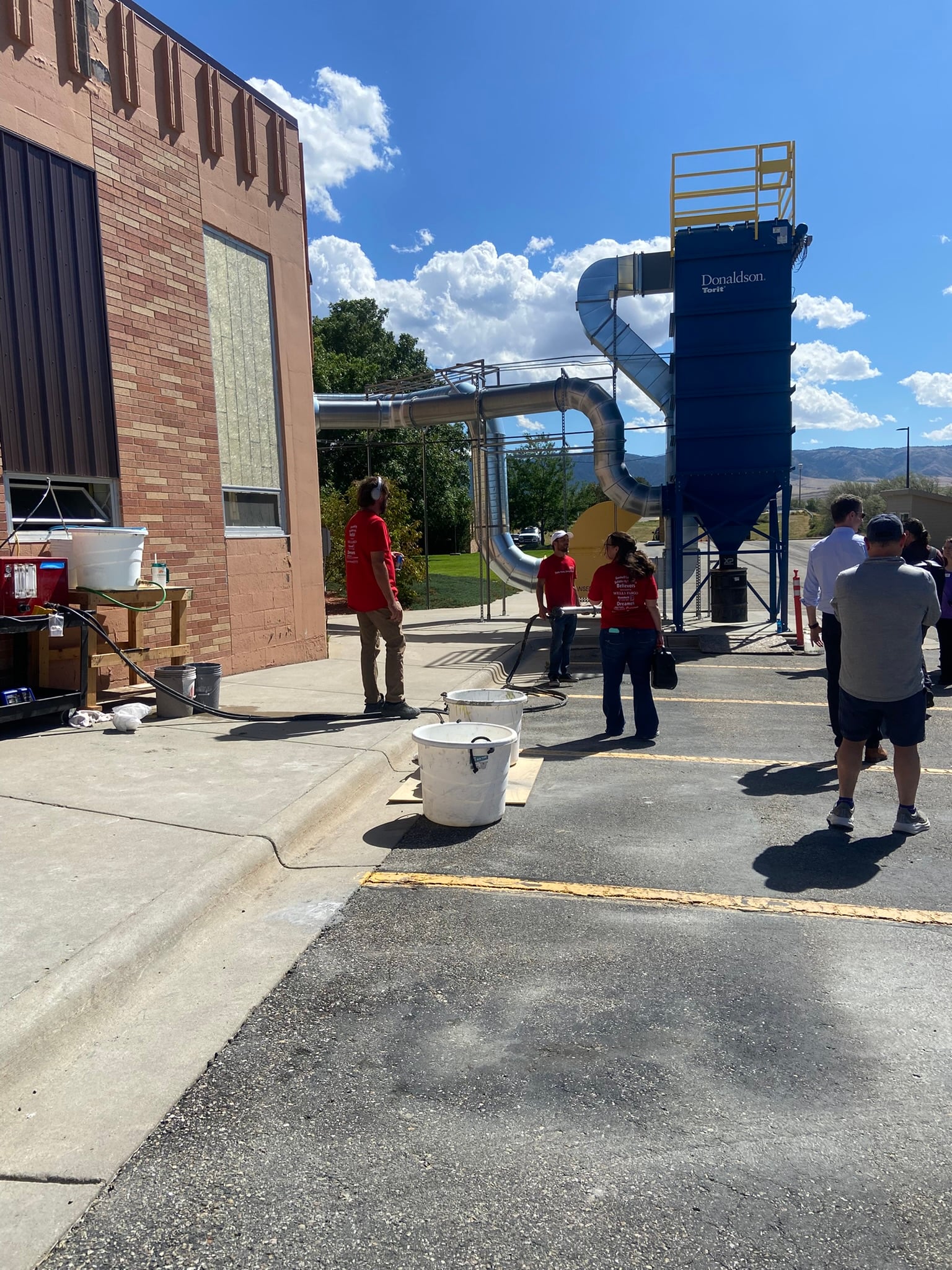
But perhaps the most exciting part of the model is the way housing production and workforce development come together.
WHN is partnering with Casper College and local students to create hands-on learning opportunities connected to the project. The vision is to eventually pair housing development with community colleges and high schools in communities across the state, helping students develop construction skills while creating the housing their communities need.
As Noah put it during a panel discussion in Casper, “We can't have housing unless we're building housing, and can't have housing unless we build the workforce.”
Instead of treating Wyoming's housing shortage and skilled-trades shortage as two separate problems, Goodwill Landing offers an opportunity to address them together.
Finding partners in unexpected places
Goodwill Landing is also a reminder that innovative solutions rarely come from one organization working alone.
Wyoming Housing Network's role has been to bring together partners with different strengths around a shared vision. Local service organizations will provide services to Goodwill Landing residents rather than WHN creating a new service-delivery system of its own. The City of Casper is helping address infrastructure needs. Casper College brings workforce training opportunities. In Our Hands brings a new construction system. And Goodwill Industries of Wyoming helped WHN acquire the property and equipment, while a $1 million grant from Wells Fargo is helping move the project and its broader partnerships forward.
That collaboration is particularly important in rural places, where resources may be limited and distance can make nearly everything more complicated – and expensive.
For Noah, finding the right partners doesn't mean convincing everyone to participate. 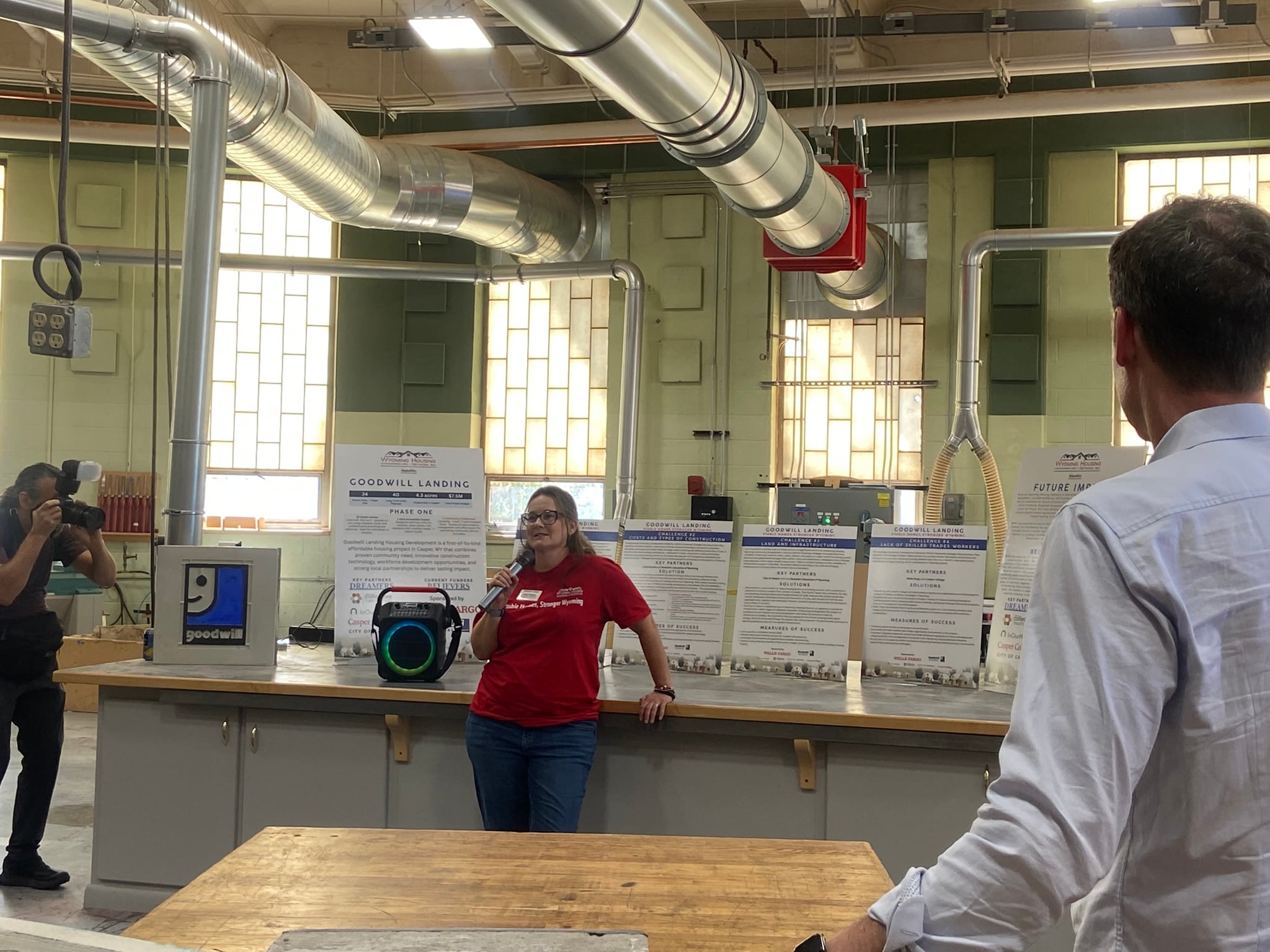
“We have not entered into a partnership or a conversation with anyone that we had to convince to be part of it,” she said. If a potential partner couldn't see the vision or wasn't aligned with the mission, WHN focused its energy elsewhere.
That foundation becomes particularly important when doing something no one involved has done before.
“There are moments where you think, ‘Are we crazy or are we genius?’” Noah said. “And it's probably a little bit of both.”
The strength of the partnership means that when challenges inevitably arise, they don't have to become obstacles. Instead, they become problems the partners work through together.
Solving Wyoming's problems, Wyoming's way
Goodwill Landing's immediate goal is important: creating homes for people who need them.
But WHN is deliberately looking beyond one development.
Noah sees the project as an opportunity to test whether off-site housing production could become part of Wyoming's long-term housing infrastructure.
The longer-term vision is a micro-factory capable of producing the panelized system in Wyoming. That could allow housing components to be manufactured throughout the year, expand access to building materials, support workforce training, provide materials to other developers and potentially create a new revenue stream that helps sustain Wyoming Housing Network's mission. The equipment, reusable molds and trained workforce could also remain in Wyoming as local assets, creating the capacity to produce the building system closer to the communities where it is needed and potentially replicate the approach across the state.
“We can solve Wyoming's problems Wyoming's way,” Noah said. 
Rural communities are sometimes framed primarily in terms of what they lack — capital, workforce, infrastructure or scale. But those constraints can also create an imperative to innovate. In a state as rural and dispersed as Wyoming, organizations have to find ways to work together. They have to make the most of the resources already present in their communities. And sometimes they have to be willing to try something that hasn't been tried before.
From proof of concept to a model worth sharing
Success for Goodwill Landing will first and foremost be measured by the people who call it home.
But five years from now, Noah hopes WHN will also know much more about how this technology can be incorporated into its development pipeline and used elsewhere in Wyoming. She sees potential for off-site production to help overcome the state's construction constraints and for additional partners to continue building on the model.
And then she wants to give what they learn away.
As a NeighborWorks network organization, WHN is connected to hundreds of nonprofits across the country that are grappling with many of the same questions: How do we build more housing with a limited workforce? How do we make development feasible in rural communities? How can housing development create opportunities beyond the homes themselves?
Noah's vision is for others to “beg, borrow and steal” from the model — adapting what works for their own communities. That may ultimately be one of Goodwill Landing's most important contributions.
Innovation doesn't always start with having more resources. Sometimes it starts with recognizing that the old way isn't solving the problem, being willing to ask a new question and reaching out to a partner you never expected to find.
In Wyoming, that willingness is bringing housing developers, educators, tradespeople, nonprofits, philanthropy and government together around a shared challenge.
It takes a village to build a community. And in rural Wyoming, that village just might be building a model the rest of us can learn from.
As part of America250, the bipartisan initiative to engage every American in the 250th anniversary of the United States, NeighborWorks is sharing the stories of people and projects that make communities stronger.