


At this year’s National American Indian Housing Council conference in Anchorage, Alaska, national housing leaders came together for a candid conversation about partnership, housing policy and the importance of Native-led solutions in shaping the future of Indian housing.
During the fireside chat, “Centering Native Voices: Supporting a Collective Vision for Indian Housing,” Marietta Rodriguez, president & CEO of NeighborWorks® America, joined Renee M. Willis, president & CEO, National Low Income Housing Coalition in conversation with Jacqueline Pata, president of Tlingit Haida Regional Housing Authority and Haa Yakaawu Financial Corp., a NeighborWorks network organization, to discuss the role national organizations can play in supporting Native communities and advancing housing solutions grounded in local realities.
Early in the discussion, Pata noted the significance of having two national housing organizations participating in the conference and the broader conversations around Indian housing.
“We need to change that, and we will change that,” Willis said, acknowledging the importance of deeper engagement and long-term partnership with Native communities.
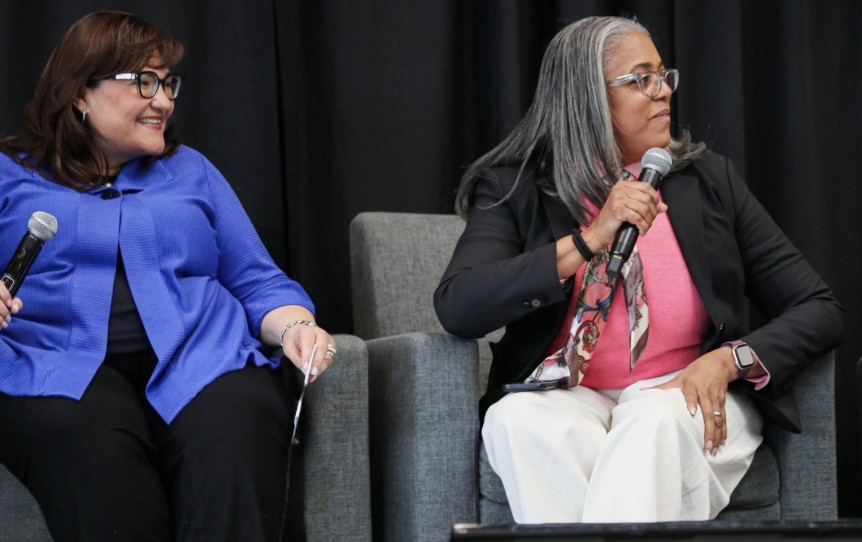
Throughout the conversation, speakers emphasized that housing challenges in Native communities cannot be addressed through one-size-fits-all approaches. Instead, they discussed the importance of listening, relationship-building and creating flexible systems that reflect the complexity of tribal communities and housing realities.
Rodriguez reflected on her recent visit to Juneau with Pata and the lessons she took away from conversations with tribal housing leaders in Alaska.
“What struck me so much about my time with you and your description of Alaskan tribes is the complexity and the layers to it that really dictates how you work,” Rodriguez said.
She also emphasized that housing cannot be approached as a single program or isolated issue.
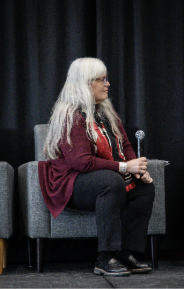
“We can’t approach housing as a program, right? Because it’s not one thing,” Rodriguez said. “You have to bring a variety of things together in the community.”
The conversation explored how housing intersects with workforce development, transportation, childcare, healthcare access and economic opportunity. Speakers noted that lasting housing solutions require flexible investments and partnerships capable of adapting to community-defined needs.
“There’s no silver bullet,” Rodriguez said. “We have to think about how we make investment flexible to meet the need.”
Pata also discussed the importance of moving beyond transactional partnerships and creating relationships rooted in trust and shared understanding. She noted that too often communities are expected to shape projects around external funding priorities instead of community needs.
In response, both Rodriguez and Willis discussed the responsibility national organizations have to listen first, convene partners and support Native communities in defining their own priorities and strategies.
“Our job as a national organization, I feel, is to bring people around the table and work in partnership for a shared goal,” Rodriguez said.
She added that authentic partnership requires more than funding.
“Creating that trusting environment does take time,” Rodriguez said. “Investment is not only money, but it’s in other forms as well.”
The discussion reinforced a broader theme that continued throughout both the conference and the Housing Our Relatives Summit, a summit hosted by NeighborWorks, NAIHC and Oweesta Corp. That focused on the spectrum of housing: Native communities must remain at the center of conversations shaping Native housing policy, investment and community development.
“It’s tribal sovereignty. It’s all the things,” Pata said as the discussion turned toward the complexity of Native housing systems and the importance of helping partners understand community realities.
The conversation ultimately served as a reflection and a call to action: Lasting housing solutions begin by centering Native voices, honoring community expertise and building partnerships capable of supporting long-term change.