

In the days after Hurricane Katrina hit the Gulf Coast, communities began to think about rebuilding, even while still responding to the devastation. In South Mississippi, community and business leaders organized a business council to try to understand the region’s recovery. From that council came the Renaissance Community Loan Fund, now known as RCLF. The nonprofit was supposed to be temporary. But 20 years after Hurricane Katrina, RCLF is still making an impact in Mississippi and Alabama. Earlier this year, RCLF, which has had a connection to NeighborWorks® America since its earliest days, became an official chartered member.
As NeighborWorks looks back on the storm and the lessons learned, we sat down with Kimberly LaRosa, president & CEO of RCLF, who also looks back on resilience and rebuilding.
NeighborWorks America: First, could you tell us where you were when the storm hit?
Kimberly LaRosa: I was working for the Isle of Capri Casinos when Katrina hit. When we made the decision that my kids and I were going to evacuate, we went to the Isle’s casino in Vicksburg, Mississippi. We lost power and the property had very little backup, because when you’re in the center of the state, you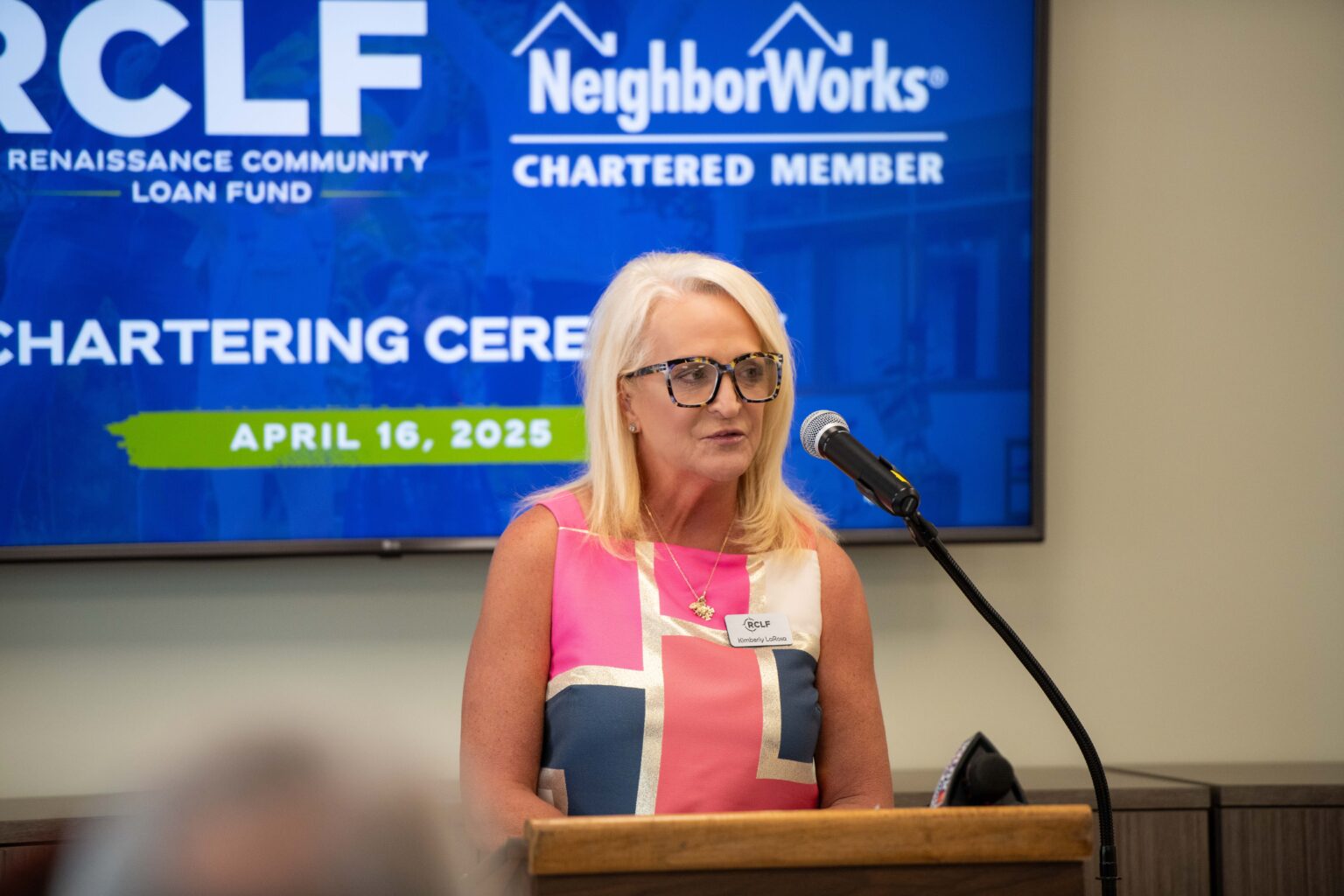 don’t expect to get hit by a hurricane. The next morning, those of us in management moved to the Isle’s casino in Shreveport, Louisiana, and my kids and I stayed there for six weeks where I assisted in getting payroll done for the Biloxi casino. We had to go to paper checks, because of course the banks were down. It was a chaotic time, and I didn’t know for days that we had 27 feet of water at my own house.
NeighborWorks: How did you move to nonprofit work?
LaRosa: I knew that I wanted to help with the recovery after Katrina. I felt that there were things that I could give that could help, even in a small way, I wanted to help to rebuild the community. That's really, really what drove me to look for this job: I just wanted to come back and help work through the issues that we were all dealing with. At that time and really the number one thing was getting people back into safe, affordable houses, after a while insurance increased so much. People were paying more in their escrows than they were in principle and interest. I applied for the chief financial officer with a nonprofit that was just getting started, and that turned out to be RCLF. I was the CFO for about the first 14 months and then became the president.
NeighborWorks: Could you tell us more about your region when recovery began? In the headlines when it comes to Katrina, the focus is often on New Orleans.
LaRosa: With New Orleans, it was the levee breaks that majority of the destruction, it was more than just the natural disaster. The biggest impact of the natural destruction of Hurricane Katrina was in Mississippi. I remember being in Vicksburg and the president of our company said the bridge over the Bay of St. Louis Bay had been confirmed total destroyed, and I said, “If that’s the case, then my house is probably gone.” That bridge is how my daughter got to school every day. The population levels were higher in Louisiana, so that’s where a majority of the attention went. In the lower six counties here in Mississippi, we just started cleaning up. There wasn’t a whole lot else that you could do. At our house, we had no power, but my husband just started tearing out sheet rock.
NeighborWorks: Talk a little about the formation of RCLF.
LaRosa: The Gulf Coast Business Council formed very quickly after Katrina – it was a group of business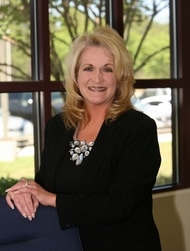 men and women who came together to say: What are the top issues that we need to deal with right now? Well, number one was the hospitality industry - they had to get the casinos back open - because the casinos and the shipyard were the top employers in the region. Number two was to help some of the smaller businesses open. But before both of those could happen, people needed a place to live. The business council realized housing needed to be a priority in and of itself; it can’t just be a division of the business council. They formed Gulf Coast Renaissance Corporation (which became RCLF) to focus on housing.
NeighborWorks: And you were created to be temporary?
LaRosa: We were supposed to operate the Community Development Block Grant program for the state and we were supposed to go away after that. It was originally a $40 million CDBG program that we were going to operate. It ended up being right at $63 million. The idea was to provide grants as down payment assistance to put down on your home because we were trying to pay down that principal so that the high escrow payment wouldn’t disqualify you for a mortgage, which is what was happening with a lot of people. We would handle the grants, and once we had expended all of the money, the organization was going to go away. While we were deploying the grants, I continued to look for other opportunities and funding. At the time when we began receiving additional funding, we applied to become a Community Development Financial Institution, and we became a CDFI in 2010.
NeighborWorks: What are some of the things you are proud of, in your response?
LaRosa: The housing crash of 2008 was starting to hit our region, but for a time, we were shielded from it because there was so much recovery money still available. But it hit us in late 2009, early 2010, and we had to review and revamp our strategy. We brought together a group of bankers and asked: What would it take to get you to make a mortgage to a low-income person while still keeping your bank in a safe position?
And we basically just listened, and then we came back to them and said what if we do this: We will fund 60% of the mortgage at 0% interest, if the bank will do 40%, or for higher income families, the bank could do 0% and RCLF would do 40%. The bank would be in first position and we would take a second position. And we said that if the mortgage starts to go bad, we'll buy the mortgage back from the bank. Nine of them stepped up and participated!
NeighborWorks: How many people were delinquent on their loans?
LaRosa: Overall, our foreclosure rate is 4.7% on all housing loans, and this includes many relationships where we were not the servicer (129/2736 total loans), nor the 1st mortgage provider, meaning we did not have direct contact with our borrowers. Our first Mortgage lending, the foreclosure rate is 1.8%, overall, since we originated our first mortgage loan in 2012, and this drops to 0.75% for loans originated after we brought loan servicing in-house late in 2019. We benefited significantly by having direct contact with all our borrowers. RCLF like all lenders are experiencing higher delinquencies, and we have successfully managed our portfolio by working proactively with our borrowers to help them navigate the reasons why they are delinquent. The key number is that we have had just four first mortgage foreclosures since 2020, one from an incarceration, one from a divorce, and two from borrowers deeding over the property in lieu of a foreclosure.
NeighborWorks: What is something that you think other communities, especially in flood prone areas, need to be thinking about right now?
LaRosa: The biggest thing is you need to have a disaster recovery plan. You need it to be comprehensive, and tested, and keep it updated, because there are going to be simple things that you're not going to think about. You know, no one ever imagined that our cell phones would quit working when we went from Vicksburg to Shreveport, but it happened. You need to have a backup plan with a backup location. And you have to be ready to anticipate what can happen but also know that there will be obstacles that you have no control over.
NeighborWorks: When you talk about disaster plans, do you mean business or family?
LaRosa: Both. We have a plan that is updated at the beginning of hurricane season every year for work and for home.
NeighborWorks: Any other places where you expanded your focus?
LaRosa: We didn't anticipate the need for programs for small businesses. Other than the Small Business Administration, no assistance was available. So, in late 2010 into early 2011, we started making very small business loans: $10,000 to $15,000. Today, we’re an SBA microlender and we are participating in the Mississippi Development Authority’s State Small Business Credit Initiative. These businesses were struggling, and they were just trying to keep their doors open. We decided we were going to start off small, test the water, see how we’d do. We thought if the need is there, we’ll just try to keep growing, and that’s what we did. We closed a $2 million loan earlier this month. We never anticipated that, but we saw the immediate need and worked steadily to meet it.
NeighborWorks: Is there anything you took away from that period of time that guides the way you lead your organization now?
LaRosa: I think the biggest thing is understanding that everything works better when you function as a team and keep communication open. As a leader, it’s important to be willing to step back and be part of a larger network with organizations that either do the same type of work that we do, or complement our work.
If everybody would've operated after Katrina in their own little bubble, we would have never seen the progress that we saw. If we’re struggling with something now, I have no problem picking up the phone and calling a counterpart, even outside the region, and saying: Hey, have you dealt with this before? And when people call me, I’m always happy to share what I know.
NeighborWorks: How does your organization help bring stability to your region now?
LaRosa: We don’t just support our people with mortgage and down payment assistance, we make sure they can afford the homes they are buying, and we make sure they are educated, following the NeighborWorks curriculum, to be successful homeowners and residents. I believe this model creates stability and sustainability.
NeighborWorks: Do you have any other advice you have for community development organizations?
LaRosa: If you’re an established nonprofit that has proven to be a good steward of funds in the past, reach out to those grantors as soon after a disaster as possible to receive more funding. But don't spend everything on the front end. The lower six counties in Mississippi were the only ones that were declared disaster areas, even though we got hit with a category one all the way to the center part of the state. We received Bush-Clinton money [The Bush Clinton Katrina Fund provided an influx of money for Louisiana, Mississippi and Alabama] pretty quickly, but we put some of that aside, knowing there were going to be people who fell between the cracks. The people right outside of the declared disaster area were living in campers, or in homes where trees had fallen on them. I would say 99% of these people were low, low income, and the majority of them were elderly. We partnered with Habitat for Humanity of the Gulf Coast and other housing organizations to put that money to work helping these people in areas where there was no federal assistance being given.
We replaced mobile homes, we built wheelchair ramps – things like that, just to get these people into safe, affordable, sustainable and accessible homes.
NeighborWorks: What does being prepared look like now compared to what it looked like in 2005?
LaRosa: Being prepared now means having a disaster recovery plan in place, testing it, and making sure everyone in the organization is on the same page. It’s about building the capacity to continue serving — and with today’s technology, that doesn’t always mean we have to physically stay. We can use our disaster plan to move seamlessly to other areas and work remotely to keep going and keep communicating with our partner organizations. The key is to be prepared for what you can, knowing you’ll still have to think outside he box and stay flexible. Every disaster is different and brings its own nuances.
Read more of our coverage on recovery and resilience after Hurricane Katrina.