

Six years ago, Elizabeth Alonzo-Villarreal was in the NeighborWorks Achieving Excellence Program, thinking about a potential capstone project that would take her organization, NeighborWorks Laredo, to the next level. The program, which NeighborWorks® America hosts in cooperation with Harvard University’s Kennedy School of Business, provides classes, coaching and mentorship for leaders like Alonzo-Villarreal, who serves as CEO.
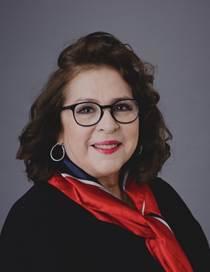 She had her answer. “We wanted to become a CDFI,” she said.
CDFI stands for Community Development Financial Institution. Organizations who work to earn a CDFI certification can make loans in areas where traditional banks cannot – to community members who may not check every box, but who are doing the work to build their credit.
“There was no CDFI within a 150-miles radius,” said Alonzo-Villarreal. She presented the idea to her board, and one member, a traditional banker, said it was the best idea he’d ever heard.
“If somebody went to a bank because they wanted to buy a home and their credit score is off by 10 points or the ratio is a little off, they can come to us,” Villarreal said. “We offer development services, education and counseling to determine if you are a good fit for a loan and we are able to offer it when a bank cannot. Being a CDFI will facilitate more lending to clients who want to become homeowners.”
Going through the preparation and training to become a CDFI took time, Alonzo-Villarreal said. “There was a lot that needed to line up. But if it was something easy to do, everyone would do it.”
NeighborWorks America provided the organization with a grant that helped the Laredo nonprofit put together a business plan. More technical assistance grants followed, and the nonprofit continued to move forward.
On Dec. 30, when she was supposed to be off from work, Alonzo-Villarreal checked her email and saw a note with the subject CDFI. “I thought: This must be about a technical assistance grant,” she said. “But it read very differently. Slowly, I read it again and then I said, ‘Oh my God, we made it! We’re certified now.”
The organization is still working on raising capital with a goal of increasing the number of homeownership loans – and hopefully, business loans – they can make to residents. But as part of the Laredo’s Community Loan Center Program, they are already providing smaller, low-interest loans as a counter to the payday loans that take advantage of workers in a tough spot.
“It’s a reminder that if you really put your mind to it and really believe in something that will bring something good to your community, you have to work at it,” Alonzo-Villarreal said. “There will be struggles along the road, but you can navigate them.”
On the walls of her office, she has two CDFI road maps created by her grandson. She continues to look at them as the organization continues to move ahead. The road maps also remind her to continue the work of creating more funding opportunities in her community. Hard work pays off and if one door closes, look for another door to open and never give up.
CDFIs play a special role in the NeighborWorks network and in the community development field. “Our network includes 81 CDFIs and about a dozen emerging CDFIs that bring much-needed resources, housing solutions and community revitalization efforts that benefit individuals and families with low income and low-income communities,” said Laurie O’Brien, senior director of lending for NeighborWorks America.
“Funders love CDFIs,” added Christian Greaser, senior manager in lending for NeighborWorks. “They don’t see them as competition; they see them as help.” And CDFIs also prepare loan recipients to take on more traditional loans, should they choose to do so.
Alonzo-Villarreal said she’s already had a number of inquiries about the loans available. And the capstone program did help her organization move to the next level, she said. “This certification marks a transformative moment for NeighborWorks Laredo, bringing a wealth of new opportunities for our organization and the communities we serve.”
Now, she says, her organization needs to raise seed capital to offer more affordable lending to the community – low-interest rate loans or grants. “I informed the Board that now that we are a CDFI, the real hard work begins,” Alonzo-Villarreal.