

There was a moment during the Spenard Walking Tour in Anchorage, Alaska, when the entire purpose of the Housing Our Relatives Summit clicked for me.
It was not during a housing finance discussion. Or even while we were talking about development during the first-of-its-kind event, which was hosted by NeighborWorks® America, Oweesta Corporation and the National American Indian Housing Council.
It happened standing beside a bus stop.
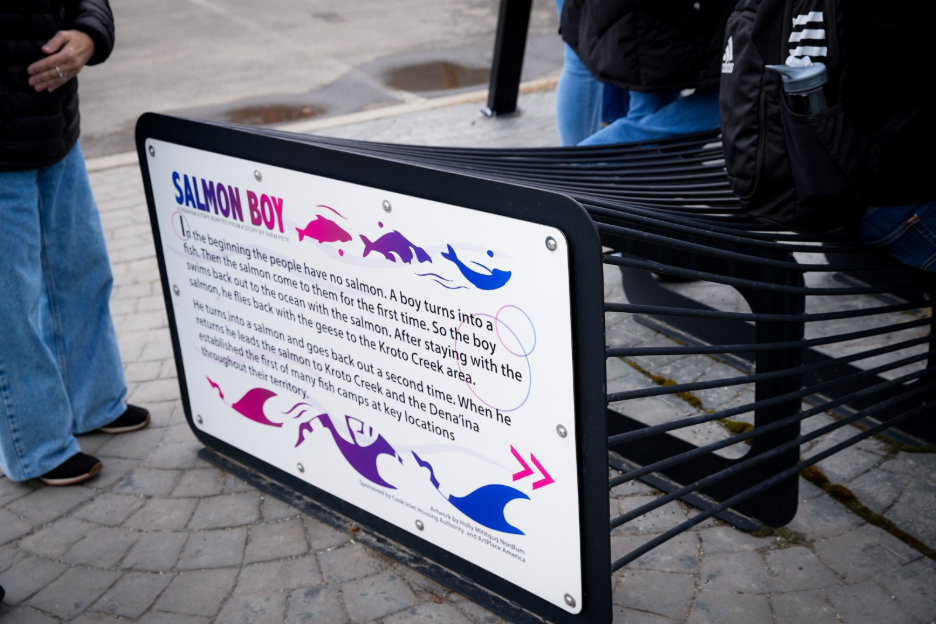
On the surface, it looked simple: A small public gathering space outside a mixed-income housing development in Spenard. Benches. Art installations. Native storytelling woven directly into the built environment.
But then Cook Inlet Housing Authority leaders began explaining the story behind it all: Salmon Boy.
In Dena’ina Athabascan tradition, Salmon Boy transforms into a salmon, travels into the ocean and ultimately leads the salmon back to his people so they can survive, sustain themselves and feed future generations.
Standing there, listening to the story while surrounded by affordable housing, intentional architectural design, public art, community gathering spaces and Native language integration, I realized this learning lab was never really about a walking tour.
It was about return.
Return to heritage. Return to community. Return to structures designed to sustain people instead of isolate them.
And honestly, that became one of the defining lessons of my time in Alaska.
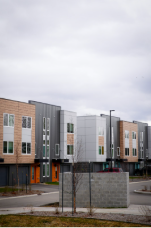
The “Placemaking in Action: Spenard Walking Tour” learning lab offered participants a firsthand look at how Cook Inlet Housing Authority has approached community development in Anchorage through housing, storytelling, ancestry and intentional public space design. Throughout the tour, leaders from the organization walked us through the transformation of a neighborhood once defined by disinvestment, contamination and blight into a growing mixed-income community intentionally rooted in connection and belonging.
“What does this have to do with housing?” asked RJ Fontaine-McHendry, manager and community engagement coordinator at The Nave Spenard. “Everything.”
That line stayed with me the entire day.
Because throughout the summit, we spent so much time discussing housing systems, financing structures, policy barriers and infrastructure challenges. All important. All necessary.
But this tour reminded me that people do not fight to stay connected to houses and structures.
They fight to stay connected to community.
At The Nave, a former church transformed into a multi-purpose community gathering space, the conversation expanded beyond housing units and square footage. Leaders described how the space now hosts Indigenous storytelling nights, Athabascan fiddlers gatherings, language preservation workshops, youth arts programming and financial wellness events.
“Without health, without community, you have no reason to want to stay,” Fontaine-McHendry said. “You have no reason to want to take root.” 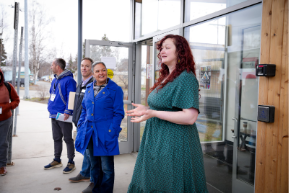
That idea of rooting people back into place echoed throughout the entire tour.
As we walked through Spenard, I found myself asking questions constantly. About obstacles. About zoning. About demographics. About mixed-income development. About how these projects actually came together in practice.
And the answers were refreshingly honest.
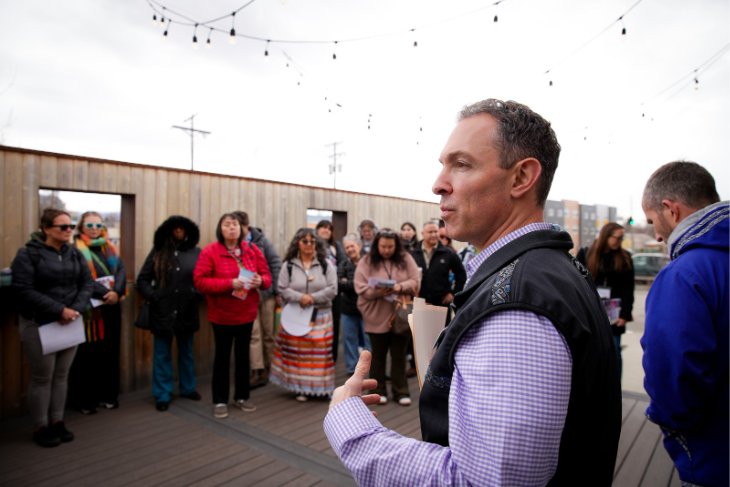
Gabriel Layman, president and CEO of Cook Inlet Housing Authority, discussed the realities of trying to build affordable housing in Anchorage, from land assembly and contamination issues to restrictive zoning and design requirements that often make development harder and more expensive.
“We want to build beautiful, too,” Layman said. “But we want to build, period, first.”
That tension felt deeply familiar to so many of the conversations happening throughout the Housing Our Relatives Summit. Communities are navigating rising construction costs, infrastructure gaps, workforce shortages and strategies and systems that were not designed with Native communities in mind. Yet despite those obstacles, organizations like Cook Inlet Housing Authority continue building anyway.
And not just building housing.
Building ecosystems.
One of the most striking parts of the tour was hearing how intentionally Native American heritage had been integrated into the physical environment itself. Native language appeared throughout the neighborhood. Public spaces reflected Indigenous design and storytelling traditions. Housing developments were intentionally mixed-income and mixed-use. Playgrounds, plazas and gathering spaces were designed not simply as amenities, but as connectors.
Even the naming of places carried meaning.
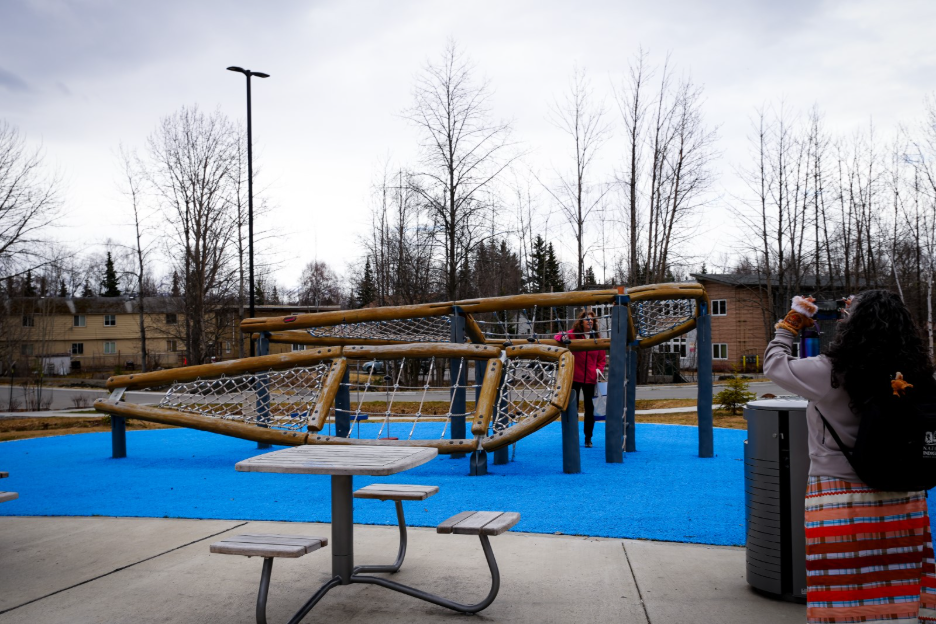
We learned about Ush Park, named after the Dena’ina word for snowshoe, inspired by the sound snowshoes make moving across snow: “ush, ush, ush.”
It sounds small.
But it is not small.
Because placemaking, at its best, tells people: You belong here.
That message matters, especially in neighborhoods and communities that have historically experienced displacement and are opportunity challenged.
As someone working in communications, I kept thinking about how often we talk about housing purely through numbers. Units built. Funding allocated. Financing layered. Metrics achieved.
Again, all important.
But this tour reminded me that housing is also emotional infrastructure.
It is memory. Safety. Belonging. Connection.
It is the reason people return home. And it is the reason they stay.
Toward the end of the tour, Layman reflected on how Cook Inlet Housing Authority became one of the first organizations in the country to combine Low-Income Housing Tax Credits with NAHASDA funding, despite resistance and skepticism at the time.
That innovation allowed the organization to serve significantly more Alaska Native and American Indian households while also changing how the broader community viewed tribal housing work.
“It has had a little bit of healing,” Layman said.
And honestly, I think that may be the best way to describe the entire experience.
Healing.
Not perfect. Not finished. Not simple.
But intentional.
Like Salmon Boy returning with what his people needed to survive, the leaders gathered at the Housing Our Relatives Summit were returning to their communities across Alaska – and across the country – with knowledge, stories, ideas and strategies meant to sustain future generations.