


Every community-based affordable housing organization eventually faces the same question: How do you help more families when the need keeps growing but your capacity doesn’t?
Construction costs rise. Funding becomes more competitive. Staff time is finite. Yet families continue looking for safe, affordable homes and opportunities to build lasting financial stability.
For Neighborhood Partnership Housing Services, Inc. (NPHS), a NeighborWorks network organization serving Southern California’s Inland Empire, those challenges sparked a different question. Rather than asking how the organization could simply take on more work, NPHS began asking how it could build its organizational strength to serve more families.
That evolution reached another milestone in January 2026, when NPHS became a co-owner and equity partner in Homes & Hope, a first-of-its-kind affordable housing delivery platform that combines nonprofit mission, affordable housing development, financing and construction expertise into a single collaborative model.
The milestone shows how local NeighborWorks network organizations are able to tap into local challenges and find the right solutions for each region.
Building organizational strength, one need at a time
Incorporated in 1990, NPHS began by helping homeowners rehabilitate owner-occupied homes in Montclair, California.
Working alongside residents, NPHS quickly realized that repairing homes in its region solved only part of the challenge. Families also needed access to affordable financing. They needed homebuyer education. Communities needed additional housing. Long-term success also depended on creating and preserving generational wealth while supporting policies that made housing more accessible.
As those needs evolved, NPHS evolved with them. It expanded into homebuyer education and financial assistance before becoming a certified community development financial institution (CDFI) in 2004. In 2015, NPHS began using factory-built technology to build homes faster and at lower cost, another place-based solution. Today, the organization’s work spans housing construction, community lending, homeownership education and wealth building, and housing policy and research.
“I think what makes us unique is that we are vertically integrated, and we use that vertical integration to create social enterprises while still being place-based,” says Clemente Mojica, NPHS president & CEO.
NPHS didn’t set out to build itself this way. Each new function grew out of a need the team encountered while serving their local communities. Instead of creating a new standalone program each time, leaders increasingly looked for ways each addition could strengthen the work already underway.
Connecting the pieces
About 15 years ago, NPHS began looking beyond individual programs and asking how each part of their work could strengthen the others.
“When you’re looking at your impact and your capacity, and your programs and services, you have to look at the scalability of each of those,” says Greg O’Donnell, chief impact officer at NPHS. “That’s what led to this platform-based approach.”
For O’Donnell, that evolution wasn’t driven by a desire to become larger. It happened gradually as leaders responded to what they were seeing in the communities they served. “Everything we have has happened very organically through all of these years of working, looking at the communities and the needs, and seeing where we can play a role,” O’Donnell says.
As new programs were added, NPHS looked for ways they could reinforce one another rather than operate independently. “It’s all interconnected,” Mojica says. “That’s how we approach our work, and that’s how we’re able to do a lot with what we have.”
The organization's CDFI now handles underwriting and financing, allowing project managers to spend more time managing projects in the field instead of paperwork. Rather than building disconnected programs, NPHS increasingly focused on creating systems that could serve more families without losing sight of the communities it serves.
“It’s added to our organizational resilience, both in capacity, managing our workload, and also to generate revenue aside from traditional funding because of our brand elevation,” Mojica says.
When innovation met opportunity
In 2018, NPHS partnered with the City of Riverside to develop Sunrise at Bogart, a 23-unit permanent supportive housing community. NPHS was exploring ways to build high-quality affordable housing more quickly and at lower cost without relying on Low-Income Housing Tax Credits (LIHTC).
Then, almost overnight, the economics of affordable housing changed. “We raised over $11 million in equity. Then after 2020, it almost doubled in cost,” Mojica says. “The cost of construction, everything doubled. Supply chain issues, the cost of concrete, steel, you name it.”
As construction costs climbed, the path forward for projects like Sunrise at Bogart became far less certain. The experience reinforced the need to find new ways to control costs, combine expertise and deliver affordable housing more efficiently.
Working on Sunrise at Bogart also introduced NPHS to Alexander Russell.
Russell went on to found Homes & Hope, a mission-driven for-profit affordable housing development company, in 2023. Two years later, he approached NPHS about becoming an equity partner.
By the time Russell approached NPHS in 2025, they had already spent years refining ways to connect lending, development, construction and community services. Mojica says those years of experimentation and refinement made the opportunity feel like a natural extension of NPHS’s work.
“Alex had a vision,” Mojica says. “We just came in like we normally do to revamp and reengineer things, and we helped create the 2.0 version, which is now the platform as it’s known today.”
A partnership built around complementary strengths
Homes & Hope brings together organizations that each contribute different areas of expertise. NPHS contributes the perspective of a community-based nonprofit and certified community development financial institution (CDFI). Its partners add expertise in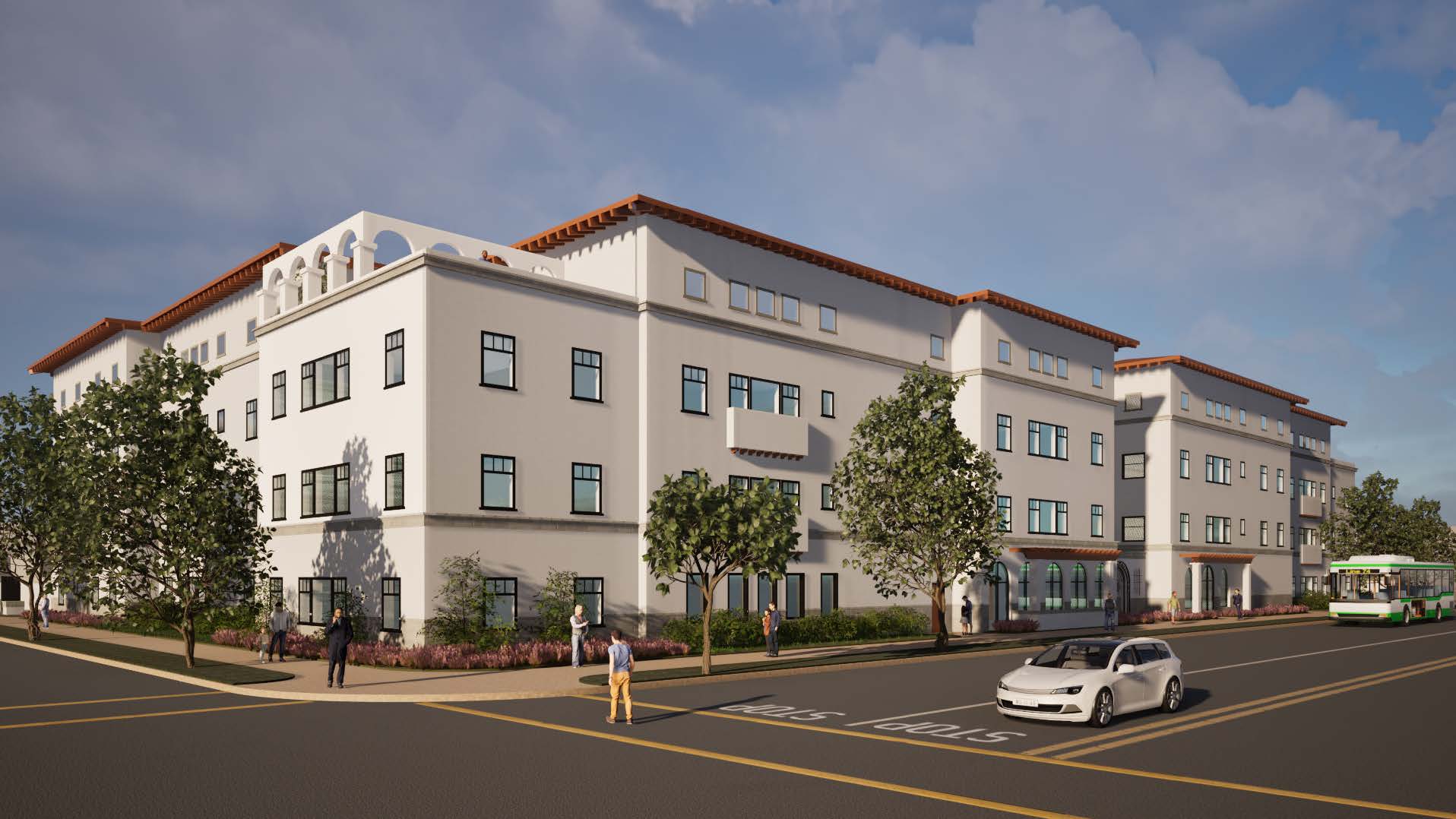 affordable housing development, construction management and operations. Together, the organizations share ownership, responsibility and risk while combining capabilities that would be difficult for any one organization to develop independently.
“It’s a lean, mean construction machine,” Mojica says. Instead of participating only as a lender or nonprofit partner, NPHS helps shape how the affordable housing platform continues to evolve. What makes the partnership distinctive is that NPHS isn’t simply participating as a mission-driven nonprofit. It’s also a CDFI equity owner helping shape the platform itself.
“NPHS becoming a co-owner and equity partner in Homes & Hope demonstrates the power of the NeighborWorks network to innovate and move beyond traditional project-based relationships by leveraging collective expertise, a shared mission and strategic resources to expand affordable housing opportunities and strengthen communities for generations to come,” says Donna Wright, NeighborWorks senior relationship manager for the Western region.
Shared ownership also changes what’s possible. “I don’t have to go in on a project on my own,” Mojica says. “This platform can do it for me, and we all share the risk.”
Today, Homes & Hope has 12 active developments representing approximately 1,470 multifamily affordable housing units across Southern California.
Expanding what’s possible
Many nonprofits already know exactly what their communities need. They have trusted relationships, intense local knowledge and a deep understanding of the residents they serve. What they may not have is the development capacity, financing expertise or construction infrastructure needed to move larger projects forward.
Homes & Hope was designed to complement these place-based nonprofits, not replace them. “This is a very inclusive platform,” Mojica says. “Homes & Hope can partner with other organizations across Southern California.”
Mojica describes the model as a “plug and play” solution that gives organizations access to additional expertise while allowing them to remain rooted in their own communities. “If there’s a developer that doesn’t have the capacity to build, we could come in and partner with them,” he says.
O’Donnell believes that’s where the platform’s greatest potential lies. “Scalability allows us to go into different areas and regions where we might not have the biggest footprint, and we’ll partner with other nonprofit and housing developers who maybe don’t have the capacity or the experience to work on these types of projects,” he says. “That’s where the experience from this platform can really help them develop projects that otherwise would have never gotten off the ground.”
Looking ahead, NPHS expects its homeownership development and CDFI lending efforts to remain focused in California’s Inland Empire while Homes & Hope continues expanding across Southern California, with the potential to grow elsewhere in California and beyond.