

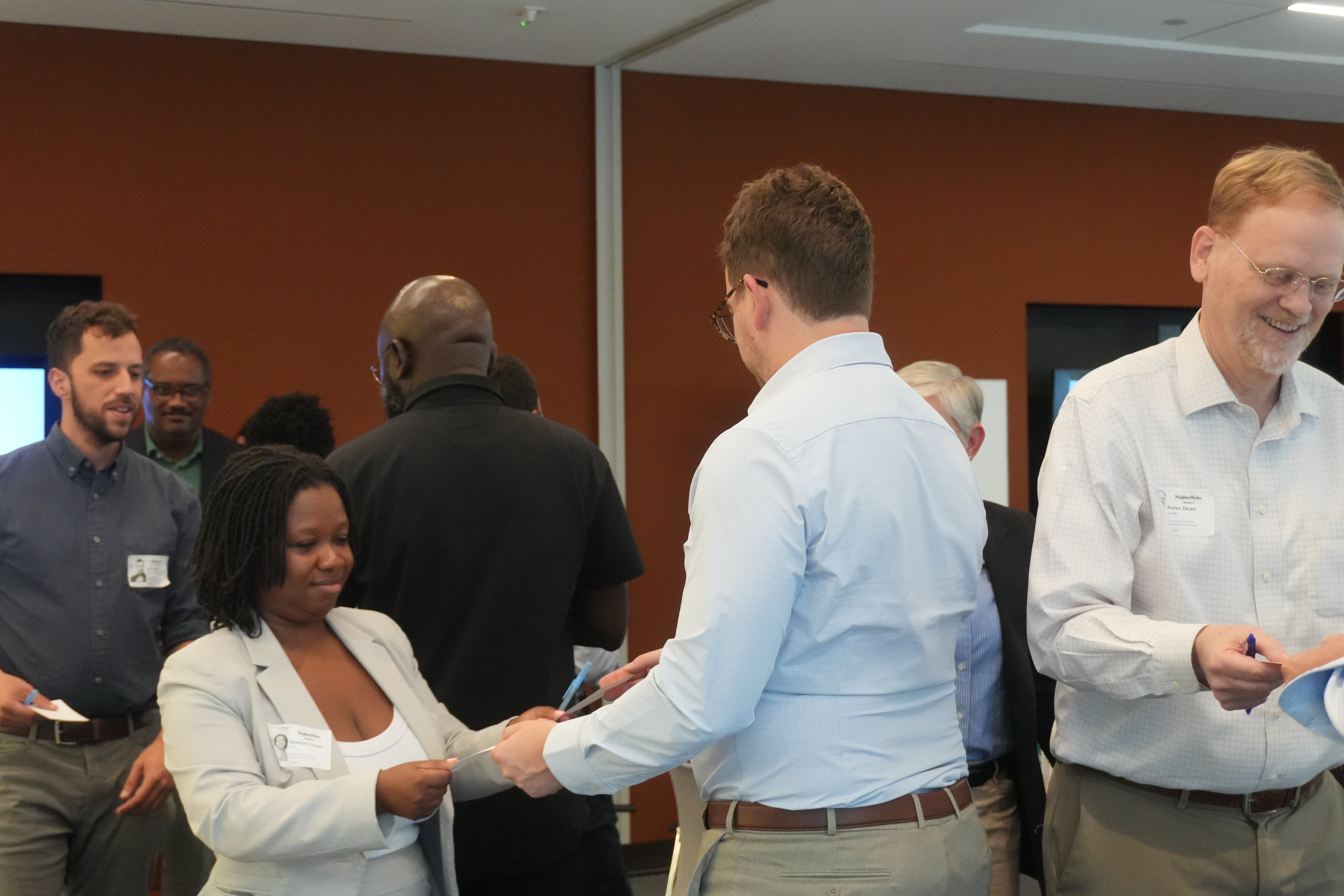
NeighborWorks® America network organizations and industry professionals met at the national nonprofit’s Washington, D.C. headquarters this month to talk about “Getting to the North Star for Shared Equity Housing.” The event comes as NeighborWorks looks at the progress that’s been made since the U.S. Congress allocated $12 million to strengthen the national infrastructure for shared equity homeownership. Jenee Gaynor, director of Shared Equity Housing for NeighborWorks, “Now it’s time to figure out what’s next, how to forge partnerships and how to keep moving forward.”
Shared equity housing makes ownership possible for families who cannot compete in traditional markets. It works like this: Residents, often with low to moderate income, purchase a home in a community land trust, a Resident-Owned Community, a co-op or by using another shared equity model, with assistance from a local nonprofit. When the homeowner is ready to move on and sell their home, the nonprofit helps them to find another low- to moderate-income buyer, who also purchases the home at an affordable price. The homeowner builds wealth through stable housing costs, paying down their mortgage and accessing a modest amount of the home’s appreciation. Then they pay it forward, keeping the home affordable for the next homeowner and beyond.
The group spent the day discussing how training and capacity growth will move this work forward, how to make the case for the housing models and how to access capital. 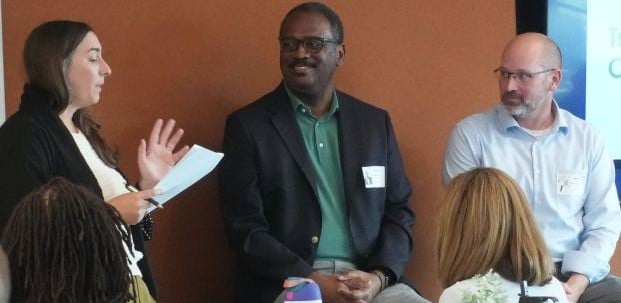
“There are still many borrowers who don’t know what shared equity housing means,” said Grounded Solutions Network’s Tony Pickett. But he’s seen the models steadily grow.
Before he was CEO at Grounded Solutions, Pickett worked at the Atlanta Land Trust Collaborative during a time when few understood what a land trust was. The first condo unit that his organization sold through the land trust went to a police officer and his family. Those first units showed the community how the approach worked and the difference they made to new homeowners. That’s where the success of this program begins.
“Shared equity gave us a mechanism to protect affordability over the long term,” offered Charlie Wesche of NeighborWorks Lincoln. The initial grant award his organization received "gave us the chance to think about how we wanted to do this for the Lincoln community; the second award was for capacity building.” From those grant awards, the organization grew to where it now has 40 single-family shared equity homes in its portfolio. “By the end of the year,” Wesche said, “it will be 50.”
NeighborWorks’ shared equity support allowed his organization to tap into a network of knowledge and information, then share that information. “We had a whole ecosystem to build,” he said. “And a whole community to educate.”
Some program practitioners of NeighborWorks had experience with the housing models before using the grants to move to the next level. Others were new to the topic.
Kaia Peterson had been steeped in resident-owned communities in Montana. She knows how homeownership can change the mindset of the people who live in a home of their own.
This month, she spoke about how building capital starts with building your reputation
NeighborWorks Montana built a reputation as an organization that could create thoughtful, sustainable deals relating to ROCs. That led to a willingness from local lenders to provide the financing needed. “It’s been exciting. And it translates into other models,” Peterson said. 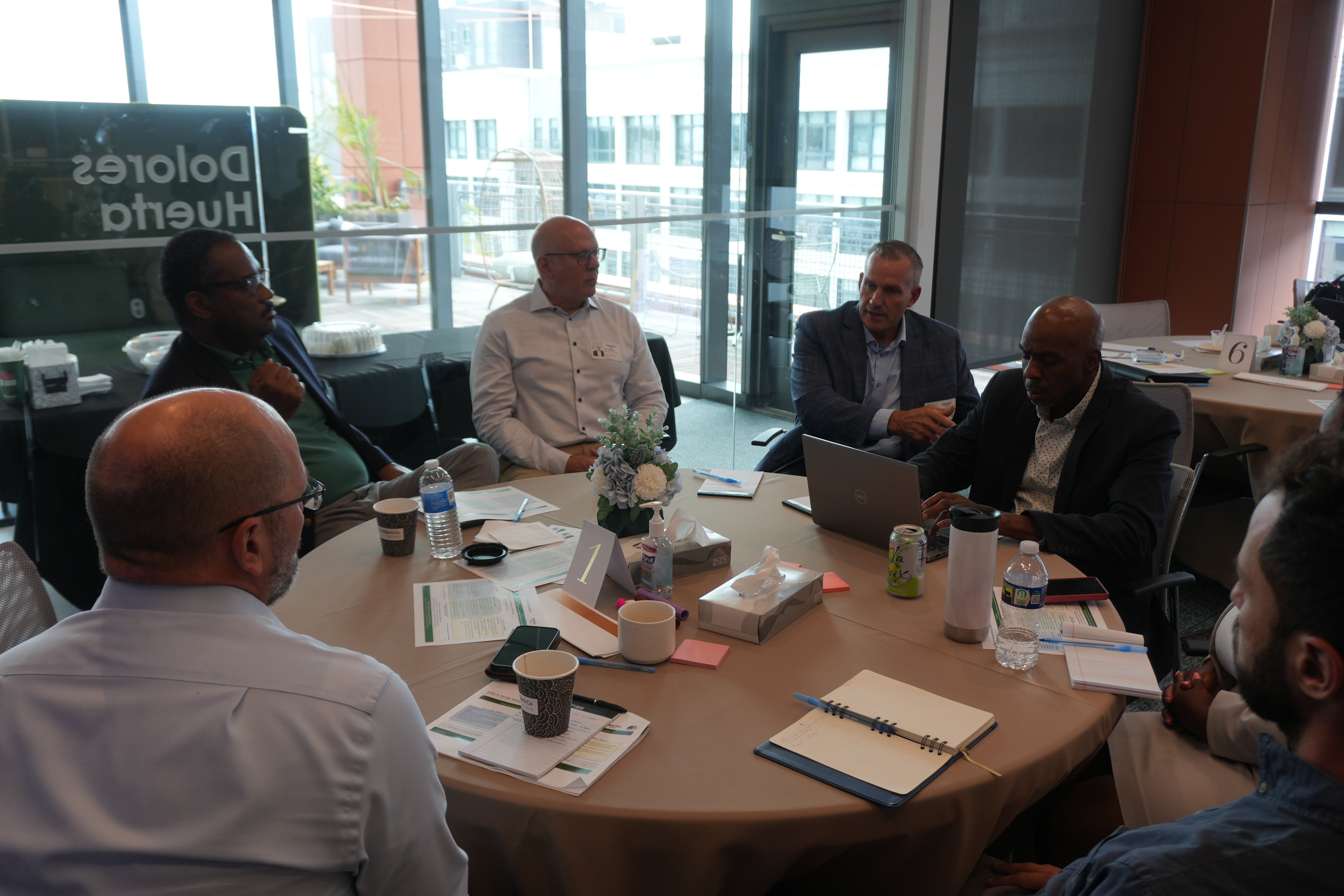
She’s also looking at how philanthropy succeeds in this space, and how to diversify funding and finances.
Gaynor said the goal of the meeting was to celebrate the collective accomplishments in shared equity housing and to learn about current work and future priorities from practitioners, intermediary organizations and other field leaders. “We want to explore opportunities for collaboration and partnership among those in the room.”
A report from NeighborWorks on the impact of the grant program will be made public soon. Meanwhile, Gaynor highlighted that more than 600 participants have taken online or in-person courses on shared equity housing, and that the number of NeighborWorks network organizations engaged in shared equity housing has tripled to nearly 100 since the initiative began.
NeighborWorks organizations have doubled their shared equity housing portfolios, Gaynor said. There are now over 5,500 community land trust, deep-restricted homes, resident-owned communities and limited-equity cooperative units stewarded over 28 states. “While we know development is challenging, our last pipeline report indicated 1,600 units in the pipeline.”
The organizations who worked on shared equity over these last years have built and preserved hundreds of new homes, as well as found new strategies and new financing for building and acquiring homes. “They’re able to do more,” Gaynor said. “There’s been progress, and that work will continue to grow.”
“I spent a lot of time advocating for shared equity housing models to be accepted – and I think that we’re truly seeing that acceptance is growing, in part. because of the increasingly large gap between the cost of housing and what people can afford,” Gaynor said.
“This is the starting point,” she emphasized.
Luis Oyola, who traveled from Charlottesville, Virginia, for the event, said the information shared throughout the day was helpful. But connecting in person with other practitioners “is always the most important thing,” Oyola added.